
 Back to List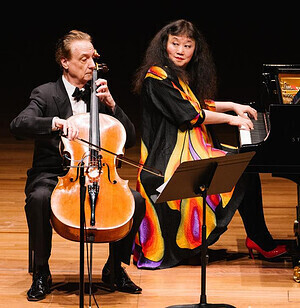
Chamber Music Society of Lincoln Center
David Finckel and Wu Han, Artistic Directors
2026–2027 New York City Concert Season
Alice Tully Hall • Rose Studio at CMS
CELEBRATING AMERICA AT 250
OPENING NIGHT AND SUMMER EVENINGS
All-American Opening Night (Oct 13) and
Summer Evenings concerts in July feature 20th-century composers
GILLES VONSATTEL PERFORMS
BEETHOVEN’S 32 PIANO SONATAS
Eight recitals across the season
WINTER FESTIVAL
MOZART — SIX AMAZING YEARS: 1782–1787
(Feb 19 – March 7)
Four concerts showcasing the breadth of Mozart’s impact on chamber music, featuring 12 different ensembles with multiple configurations
PREMIERES AND COMMISSIONS
Six New York Premieres, including three CMS Co-Commissions, by
Eunike Tanzil, Mark-Anthony Turnage, Samuel Carl Adams, Benjamin Scheer, Shawn Okpebholo and Michael Stephen Brown
Sonic Spectrum Series (Nov 12, Jan 21, March 4, April 29)
ART OF THE RECITAL
Bella Hristova and Gloria Chien (Oct 15) | Ransom Wilson and Anne-Marie McDermott (Feb 18) | Jonathan Swensen and Juho Pohjonen (April 15)
STRING QUARTET SERIES
Schumann Quartet (Nov 15)
Escher String Quartet (February 27)
Quartetto di Cremona (March 21)
Takács Quartet (April 17)
CMS DEBUTS
Pianists Haochen Zhang and Myra Huang; Harpist Elizabeth Haines; Trumpeter Caleb Hudson
BAROQUE FESTIVAL IN DECEMBER
Baroque wind concertos, works by J.S. Bach and sons, and
The Brandenburg Concertos – Annual Holiday Tradition
† Indicates that this artist is a current Bowers Program member.
* Indicates a CMS premiere.

Wu Han (left) and Jean-Efflam Bavouzet (Nov 7) | Photo: Russ Rowland
New York, NY: January 28, 2026 — The Chamber Music Society of Lincoln Center (CMS) announces its 2026–27 season, with 80 concerts of chamber music by 100 composers across 346 years. Concerts take place in Alice Tully Hall and the Daniel and Joanna S. Rose Studio at CMS (with many more concerts on tour in the US and beyond). These performances feature CMS’s international, intergenerational roster of artists whose virtuosity and camaraderie breathe new life into each work on every program.
The season opens with an all-American Opening Night (Oct 13) in honor of the 250th anniversary of the United States’ independence, with music by William Bolcom, Amy Beach, Bernard Herrmann, and Aaron Copland. The celebration begins in the lead-up to the fall season, when each of the six Summer Evenings concerts in July includes one or more American composers. Beginning on October 25 and continuing throughout the season, renowned pianist Gilles Vonsattel performs the 32 piano sonatas of Ludwig van Beethoven in eight concerts. Vonsattel is renowned for bringing his elegant, precise technique, and a vibrant spontaneity to a wide variety of repertoire. This season’s Winter Festival (Feb 19–March 7) explores the impact and genius of Wolfgang Amadeus Mozart by diving deep into a prolific and groundbreaking six-year compositional period during which he composed some of his most consequential chamber works.
“As Artistic Directors of CMS, we have always felt it important for each season to have its own unique character,” said CMS Artistic Directors David Finckel and Wu Han. “Some seasons have a single thread that is woven throughout, but this season we offer several themes that take advantage of the amazing depth of the chamber music repertoire. The American anniversary offers the perfect opportunity for us to celebrate this country’s significant contribution to the chamber music repertoire, which through its richness and variety perfectly reflects the essence of our nation. Gilles Vonsattel’s cycle of Beethoven’s piano sonatas in a single season will be not only an historic first for CMS, but a significant event globally, as few pianists anywhere have undertaken this monumentally difficult challenge. The eternally powerful music of Mozart never needs excuses to be performed, revered and enjoyed, and we are excited that our Winter Festival offers a deep dive into his miraculous music from multiple perspectives. As always, CMS’s roster of artists will perform chamber music throughout the season at a consistent level of technical brilliance and musical integrity to be found nowhere else. We can’t wait for the music to begin!”
Over the course of the season, CMS continues its longstanding legacy of commissioning and presenting new chamber works that expand the repertoire by presenting six New York premieres, including three CMS co-commissions, and music by 23 living composers across 12 concerts.
The annual Art of the Recital series provides CMS artists with the opportunity to craft programs that are meaningful to them, whether it’s by revisiting repertoire that has been an integral part of their careers and/or exploring new works in programs that offer their own individual perspectives. This season features violinist Bella Hristova with pianist Gloria Chien (Oct 15), flutist Ransom Wilson with pianist Anne-Marie McDermott (Feb 18), and cellist Jonathan Swensen with pianist Juho Pohjonen (April 15).
Other highlights include an evening of two-piano and four-hands works, featuring an all-star roster of pianists, including Wu Han and Jean-Efflam Bavouzet (Nov 7); Schubert’s Winterreise with tenor Matthew Polenzani (Jan 24); and clarinet quintets by Mozart and Brahms with Sebastian Manz, Principal Clarinet of the SWR Symphony Orchestra in Stuttgart (May 2). The season finale on May 16, “From Bach to Stravinsky,” features Stephanie Blythe singing Haydn, Tommaso Lonquich in Mozart’s Clarinet Concerto, Stravinsky’s “Dumbarton Oaks” Concerto, and more.
The season of concerts at CMS are enhanced and complemented by a variety of talks, including a special Beethoven piano sonata lecture series by Gilles Vonsattel and CMS’s popular long-running lecture-and-performance series, Inside Chamber Music. CMS also offers concerts for families; relaxed performances designed to support a range of access needs; and free community concerts around New York City. Many of CMS's Rose Studio concerts are also livestreamed for free to audiences worldwide.
Subscriptions to the 2026-27 season are on sale now at chambermusicsociety.org, including Make-Your-Own packages. Single tickets will go on sale later this summer.
A chronological list of concerts for 2026-27 is available at the link below:
Chronological List of Concerts, CMS 2026-27

Kristin Lee, violin, Nina Bernat, bass, and Tara Helen O’Connor, flute (Oct 13) | Photos (L to R): Harrison Truong, Titilayo Ayangade, Cherylynn Tsushima
2026–27 SEASON HIGHLIGHTS
CELEBRATING AMERICA AT 250
Opening Night: Copland’s Appalachian Spring (Oct 13)
Summer Evenings (July 2026)
To mark the 250th anniversary of the adoption of the Declaration of Independence on July 4, 1776, the 2026–27 season at CMS opens on October 13 with a program of four chamber works by 20th-century American composers that each offer a different perspective on what constitutes American music. In the 1960s, William Bolcom was introduced to Scott Joplin’s rags, and soon he and his composer peers were writing their own rags in similar styles, picking up the thread of a forgotten American tradition; opening night begins with three of Bolcom’s most popular piano rags arranged for string quartet. Amy Beach was a gifted pianist and composer who became the first American woman to write and publish a symphony. Her 1907 Piano Quintet was a milestone of American chamber music, acknowledged today as a worthy successor of 19th-century models such as that of Brahms. Bernard Herrmann’s instinct for orchestral color enlivened all the films he scored, including Citizen Kane and seven by Alfred Hitchcock. His score for Psycho — heard here in Herrmann’s own suite Psycho: A Narrative — has become synonymous with terror. Perhaps no single work of classical music more embodies the American spirit than Aaron Copland’s Appalachian Spring Suite, which brings this program to a close in an arrangement for 13-player ensemble.
Leading up to the fall season, CMS’s ever-popular and historically sold-out Summer Evenings series in July weaves selections by American composers, from the 18th century to today, on each program: featured composers are John Corigliano, Gershwin, Bernstein, Burleigh, Barber, Wynton Marsalis, and a string quartet attributed to founding father Benjamin Franklin. The six Summer Evenings concerts take place July 7, 11, 14, 18, 21, and 25, with all tickets just $20. CMS is once again offering at least 100 free tickets per performance to the public via lottery, with details available later this spring. Following each performance, the entire audience is invited to a free wine reception with the artists in the lobby.
WINTER FESTIVAL: MOZART — SIX AMAZING YEARS: 1782–1787 (Feb 19–March 7)
This season’s Winter Festival focuses on the chamber music of one composer, Wolfgang Amadeus Mozart, during a particularly productive period of his career: the six years from 1782 to 1787. Taking inspiration from Haydn, Mozart pushed the chamber music genre during these years to places no one had previously conceived. CMS presents a survey of the breadth and variety of this era through works for 12 unique ensembles in four concerts, showcasing CMS artists bringing their virtuosity, elegance and exceptional playing to this peerless repertoire.

L to R: Richard Lin, violin, Sterling Elliott, cello, Sebastien Manz, Clarinet (Feb 19)
- Mozart’s Winds (Feb 19): Four indispensable members of the wind family — oboe, bassoon, clarinet, and horn — add unmistakable color and dimension when combined with strings and piano in various chamber configurations. The winds shine equally on their own in the program’s concluding work, the Serenade in C minor for Two Oboes, Two Clarinets, Two Bassoons, and Two Horns.
- Mozart and the Piano (Feb 23): This program spotlights just a few of Mozart’s contributions to the keyboard repertoire, including history’s first-ever piano quartet as well as solo works and standard-setting violin sonatas. The two pianists featured are Gilbert Kalish — who recently celebrated his 90th birthday and was the recipient of CMS’s 2025 Award for Extraordinary Service to Chamber Music — and Evren Ozel, who was Bronze Medalist in the 2025 Van Cliburn International Piano Competition and is a current member of the CMS Bowers Program.
- Mozart: The “Haydn” Quartets (Feb 27): Mozart’s six “Haydn” quartets were dedicated to his close friend and the father of the genre, Joseph Haydn. The younger composer was inspired by the way in which Hadyn treated all four instruments with equal importance in his Op. 33 quartets. Upon hearing Mozart’s tribute, Haydn declared Mozart to be “the greatest composer known to me.” The Escher String Quartet performs three of the Op. 33 quartets, including its crowning glory, the “Dissonance” Quartet, which earned its nickname for the clashing pitches in its slow introduction.
- Mozart Milestones (March 7): The Winter Festival’s final program celebrates Mozart as innovator and the creator of two chamber ensembles practically unheard of in his day that went on to endure for centuries: the piano trio with clarinet, and the viola quintet. Rounding out this program is a standard piano trio, also following the example set by Haydn.

Gilles Vonsattel | Photo: Cherylynn Tsushima
GILLES VONSATTEL PERFORMS THE 32 BEETHOVEN PIANO SONATAS
“Vonsattel worked as if he were revealing music out of sound the way Michelangelo revealed figures in stone. He had a wonderful light touch, but one was always aware that he could unleash formidable power at any moment.” –Bachtrack
“Mr. Vonsattel used his razor-sharp technique to make the older works sound as adventurous as the more recent ones.” –The New York Times
In a special series spanning the entire 2026–27 season, esteemed pianist Gilles Vonsattel presents eight recitals of Beethoven’s 32 Piano Sonatas. Possessing consummate technique, stylistic integrity, and probing intellect, Vonsattel has emerged as a descendant of history’s most celebrated Beethoven interpreters. CMS worked closely with Vonsattel to bring this project — the result of a dream years in the making — to life this season.
“Gilles is one of the greatest interpreters of the German repertoire that I have ever known, with the integrity, discipline and understanding of structure it takes to do justice to the composer,” said pianist and CMS co-Artistic Director Wu Han. “Every aspect of his playing was made for this music, on the highest level. Conquering Beethoven’s sonatas is a huge and rare undertaking; Gilles has been preparing for years and is taking a special sabbatical to allow him the time to perform this cycle. It’s an historic challenge for any pianist courageous enough to rise to the occasion, and it also reflects CMS’s commitment to supporting young American pianists who devote so much talent, time and energy to such important repertoire.”
“I was first introduced to the Beethoven sonatas decades ago, but have been particularly focused on the entire cycle for nearly the past three years,” said Vonsattel. “These works trace the development of a mind utterly faithful to bedrock creative principles, yet never satisfied with prior achievement, always exploring new terrain. The two Alice Tully Hall recitals are mini-cycles unto themselves, exploring vast contrasts in sonorities and expression. The programs in the Rose Studio reveal a more gradual evolution throughout Beethoven’s astonishing creative project. To play this music for an audience as attuned to the subtlest details in musical dialogue as our audience at CMS is a dream.”
The first and last recitals of the series take place in Alice Tully Hall. On October 25, Vonsattel traces the evolution of Beethoven’s compositional language—from his first published sonata to the heroic “Waldstein” and finally to the “Hammerklavier,” the definitive, hard-earned breakthrough to his late style. The series culminates on March 30 (incidentally, four days after the 200th anniversary of Beethoven’s death in 1827) with a farewell to the Beethoven sonatas. The program begins with the “Pastoral” Sonata’s paean to nature and continues with the “Appassionata,” defined by nearly unrelenting conflict and intensity; “Les Adieux” with its transformed horn calls; and Op. 111, which provides a summation of the art of the composer. The six intervening concerts in the Rose Studio offer audiences the opportunity to hear Vonsattel’s interpretation of this repertoire in a beautiful, intimate space. (Nov 5, Dec 1, Jan 14 & 26, March 2 & 11).
Complementing the concerts is a special three-part lecture series by Vonsattel that provides a listener’s guide and an interpreter’s perspective from the piano. Each 75-minute lecture, delivered in the Rose Studio, explores different facets of Beethoven’s creative process and his development as a composer (Oct 20, Jan 19, March 16).
PREMIERES, CMS CO-COMMISSIONS & SONIC SPECTRUM
CMS is proud to present new commissions and premieres by contemporary composers throughout the season; since its founding in 1970, CMS has commissioned more than 200 works in a variety of instrumentations, contributing significantly to the continued vitality of the art form. During the 2026–27 season, CMS presents six New York premieres, three of which are CMS co-commissions.
This season’s New York premieres include a new work* for violin by Eunike Tanzil (Oct 15); a new work* for string quartet by Mark-Anthony Turnage and Samuel Carl Adams’s String Quartet No. 3 “Alma” (Nov 12); Benjamin Scheer’s These Shrouded Hills for Piano, Violin, Viola, and Cello (Jan 21); a new work for tenor and piano by Shawn Okpebholo (March 4); and Michael Stephen Brown’s The Carnival of Endangered Wonders: A Zoological Fantasy* (April 4).
*Indicates CMS Co-Commission
Sonic Spectrum is CMS’s series devoted predominantly to the work of living composers and presents four concerts each season featuring work by an international roster of composers on Thursday evenings. This season’s lineup:
- Nov 12: Mark-Anthony Turnage, Caroline Shaw, Samuel Carl Adams, and Jessie Montgomery
- Jan 21: John Adams, George Tsontakis, Benjamin Scheer and Timo Andres (2024 Elise Stoeger Prize winner)
- March 4: Shawn Okpebholo, Eric Malmquist, Alistair Coleman, and Nico Muhly
- April 29: Ken Ueno, Paul Wiancko, Sofia Gubaidulina (1931-2025), and Salina Fisher
Living composers elsewhere on the 2026–27 season include John Corigliano (Summer Evenings, July 7), Wynton Marsalis (Summer Evenings, July 25), Arvo Pärt (Art of the Recital, April 15), Gabriela Lena Frank (Quartet Series, April 17) and Aaron Jay Kernis and Bruce Adolphe (Greatest Hits, May 4).

Bella Hristova, violin, and Gloria Chien, piano | Photos: Dario Acosta, Pilvax
ART OF THE RECITAL
CMS’s intimate recital series offers artists the opportunity to collaboratively curate programs that represent a particular point of view, explore new repertoire, revisit music that carries special meaning in their lives, or all of the above.
- Bulgarian-American violinist Bella Hristova and pianist Gloria Chien present works by Stravinsky, Messiaen, Prokofiev, Bulgarian composer Pancho Vladigerov, and the World Premiere of a CMS co-commissioned work by Eunike Tanzil for solo violin. “This program pairs music I’ve played since childhood with music being created today,” Hristova commented. “Vladigerov’s ‘Horo’ showcases the rich folk musical tradition of Bulgaria, and the Prokofiev First Sonata is one of the earliest pieces I remember learning. Eunike Tanzil’s new unaccompanied work, co-commissioned by CMS for my project Lineage, will receive its world premiere on this recital. These are works I absolutely adore, and I’m thrilled to present them at CMS with Gloria Chien!” (Oct 15)
- International soloist, conductor, chamber musician and recording artist Ransom Wilson is widely recognized as one of the greatest flutists of his generation. “In 35 years at CMS, my greatest joy has been making music together with friends who began as colleagues and became family,” said Ransom. “This recital is the very embodiment of that joy, with a program of works I’ve loved forever, that also feel like old friends,” Ransom performs solo works by Debussy, Jolivet, and Rivier; duets with pianist Anne-Marie McDermott (J.S. Bach, Mozart, Martinů, and Guastavino); and Doppler’s Andante and Rondo for Two Flutes and Piano with fellow flutist Tara Helen O’Connor. (Feb 18)
- Cellist Jonathan Swensen, a current CMS Bowers Program artist and winner of the 2024 Naumburg International Cello Competition, joins Finnish pianist Juho Pohjonen, known for his “pearly touch” and “elegant musicianship” (The New York Times), on a program of cello and piano duets by Lutosławski, Fauré, Arvo Pärt, Poulenc, and Chopin. “These works,” said Pohjonen, “span a massive emotional range, from the absolute stillness of Arvo Pärt to the unbridled romanticism of Chopin. It is the kind of intimate, intense storytelling that feels right at home at CMS.” (April 15)

Quartetto di Cremona (March 21) | Photo: Genoa Olga Dimenshtein
STRING QUARTET SERIES
Throughout the 2026–27 season, CMS welcomes distinguished string quartets from around the world to perform great works for this quintessential configuration of instruments.
On November 15, the Schumann Quartet performs the first String Quartets of Tchaikovsky and Mozart — presaging CMS’s exploration of more mature quartets by Mozart in the Winter Festival — as well as turbulent 20th-century quartets by Stravinsky and Ives. The Quartetto di Cremona, known for its “breadth of sound and capriciousness combined with perfect tuning and ensemble” (Gramophone), returns for its third CMS appearance on March 21 with works by Hadyn, Grieg, and Janáček. The Grammy-winning Takács Quartet, the 2026 recipient of Chamber Music America’s prestigious Richard J. Bogomolny National Service Award, is chamber music royalty; in its program on April 17, the Takács samples three vibrant eras of string quartet repertoire, including a late Mozart quartet, Brahms’s first foray into the genre, and Gabriela Lena Frank’s Quijotadas from 2007. This will be the Takács’s first CMS performance with its newest member, cellist Mihai Marica, who began at CMS as a Bowers Artist and is a frequent presence on the CMS stage. On February 27, as part of the Winter Festival, the Escher String Quartet, whose exceptional musicianship and approachability have earned them a warm welcome from CMS audiences, returns once more for three of Mozart’s “Haydn” string quartets.

The Brandenburg Concertos at CMS | Photo: Cherylynn Tsushima
ANNUAL DECEMBER BAROQUE FESTIVAL
The opening concert of this year’s Baroque Festival on December 6 and 8 features a wind soloist in every work, illuminating how composers during this era found new ways of giving wind instruments equal prominence with strings. On December 11, the focus is on the mighty Bach dynasty, tracing a throughline from Johann Sebastian’s late works to the output of three of his talented sons — Johann Christian, Carl Philipp Emanuel, and Wilhelm Friedemann — who helped usher in the Classical Era. Harpsichordist Kenneth Weiss, who curated the program, notes that J.S. Bach’s A Musical Offering, known for its unique ability to blend intellectual depth with emotional resonance, is presented alongside selected works by his sons that “illuminate their shared musical legacy while highlighting their distinct individual styles.” J.S. Bach’s six Brandenburg Concertos, a longstanding CMS holiday tradition, conclude the Festival December 13, 15, and 18.
UNUSUAL COMBINATIONS, THEMATIC CONCERTS, AND STELLAR GUEST ARTISTS
- Dvořák, Debussy, and Chaminade (Oct 30): This concert, dedicated to the levels of expression possible through the piano trio, features Trio No. 1 in G minor by Cécile Chaminade, a contemporary of Brahms and Saint-Saëns who was so popular in her day that “Chaminade Clubs” dedicated to her work sprang up across the United States. Also included are Debussy’s Trio in G major, composed the same year as the Chaminade (1880), when Debussy was only 18, and Dvořák’s “Dumky” trio, a musical farewell to his homeland.
- Gershwin’s An American In Paris (Nov 7): Pianist Jean-Efflam Bavouzet joins an intergenerational ensemble of CMS’s talented pianists — Alessio Bax, Anne-Marie McDermott, Evren Ozel (a member of the CMS Bowers Program), and Wu Han — for a program of four-hand and two-piano repertoire, including music by Mozart, Chopin, Tansman and Lutosławski. In a grand finish, the program concludes with a two-piano arrangement of Gershwin’s American in Paris.

Ken Noda, piano, and Matthew Polenzani, tenor | Photo: Cherylynn Tsushima
- Schubert’s Winterreise (Jan 24): After electric CMS debut in the 2024–25 season performing Schubert’s Schwanengesang, acclaimed lyric tenor Matthew Polenzani returns to CMS with pianist Ken Noda for another powerful Schubert cycle, Winterreise, completed during the final year of Schubert’s life. Setting the stage are string quartet miniatures by Haydn and Felix Mendelssohn played by the Viano Quartet, a current CMS Bowers Program ensemble and praised by the Boston Globe for its “virtuosity, visceral expression, and rare unity of intention.”
- Mahler, Brahms, and Schumann (Jan 31 & Feb 2): An all-star quartet of CMS artists including Artistic Directors Wu Han and David Finckel, violinist Arnaud Sussman, and violist Matthew Lipman collaborate on Brahms’s Piano Quartet No. 3 in C minor and Robert Schumann’s Piano Quartet in E-flat major, two of the greatest examples of the form. Opening the concert is Mahler’s Piano Quartet in A minor, which could have been in the same league had the composer completed more than a single movement.
- Rachmaninoff and Taneyev (Feb 9): This program devoted to sadness, mourning, and remembrance includes rarely heard gems: Arnold Bax’s Elegiac Trio for the unusual combination of flute, viola, and harp, composed to honor Bax’s friends lost during Ireland’s Easter Uprising of 1916, and Caplet’s Conte fantastique for harp and string quartet, a tone poem retelling Edgar Allan Poe’s short story “The Masque of the Red Death.” Rounding out the program are Rachmaninoff’s Trio élégiaque and Taneyev’s Quintet for a triumphant and uplifting closing.
- Carnival of the Animals (April 4): This survey of classical music’s depictions of animals from the Baroque period to today opens with Vivaldi’s “Il gardellino” (“The goldfinch”) and features composer-pianist Michael Stephen Brown’s The Carnival of Endangered Wonders: A Zoological Fantasy, a CMS co-commission inspired by a diverse animal kingdom and the need to protect our planet’s wildlife. The grand finale is Saint-Saëns’s Carnival of the Animals.
- Brahms and Mozart Quintets (May 2): CMS’s exploration of Mozart continues with his Clarinet Quintet, paired with that of Brahms. Both composed towards the end of each composer’s life, these are two of the most famous examples of clarinet quintets in chamber music; clarinetist Sebastian Manz, an alum of the CMS Bowers Program, performs on both works.
- Greatest Hits (May 4): A program of beloved audience favorites, including Mozart’s Eine kleine Nachtmusik (after a 28 year absence from CMS) and Pachelbel’s Canon and Gigue in D major, are performed by CMS’s virtuoso artists, known for adding unexpected sparkle to familiar repertoire. Alongside these gems are recent works paying tribute to these melodic gems. Aaron Jay Kernis’s guitar quintet, 100 Greatest Dance Hits, featuring Grammy-winning guitarist Jason Vieaux, closes the evening on a high note, with this “spicy, saucy work, a sort of affectionate deconstruction of pop music idioms, including vintage ‘easy listening’, disco and salsa.” (Baltimore Sun)
- Season Finale: From Bach to Stravinsky (May 16): A large, powerful ensemble convenes to celebrate the 2026–27 season’s close with chamber works of orchestral scale. Mezzo-soprano Stephanie Blythe is the soloist in Haydn’s chamber cantata Arianna a Naxos. Stravinsky’s “Dumbarton Oaks” concerto for chamber orchestra is paired with one of the works that inspired it, J.S. Bach’s Third Brandenburg Concerto. Mendelssohn’s youthful string sinfonia then leads to Mozart’s Clarinet Concerto, his last completed work, finished only weeks before his death.

The Rose Studio at CMS | Photo: Cherylynn Tsushima
ROSE STUDIO & LATE NIGHT ROSE SERIES (6:30 and 9:00 PM)
Concerts in the intimate Rose Studio at CMS explore both classics and rarities of the chamber music repertoire. The 6:30 PM performance offers traditional seating, while the 9:00 PM performance — also available as a free livestream — offers cabaret-style seating with a complimentary glass of wine; both performances are hosted by one of the artists performing that evening. This season’s Rose Studio & Late Night Rose Series includes works by: Czerny and Brahms (Oct 22); Vanhal, Britten, and Reinecke (Nov 19); Fibich and Martinů (Feb 4); Haydn, Bloch, and Robert Schumann (March 25); and Crusell and Walton (May 6). Complete programs can be found in the attached chronological listing of concerts.
INSIDE CHAMBER MUSIC
In this long-running and hugely popular lecture-and-performance series, distinguished composer and radio personality Bruce Adolphe provides insights into masterworks being performed at CMS this season. Each lecture includes live performance excerpts from the featured work and a full performance of one movement at the end. The 2026–27 Inside Chamber Music season focuses on works by Mozart to complement the Winter Festival, with lectures on October 28, February 10, February 17, and February 24. Other lectures explore works by C.P.E. Bach (Nov 4), Tchaikovsky (Nov 11), Brahms (Nov 18), and Grieg (Feb 3).
CHILDREN’S AND FAMILY CONCERT SERIES
Meet the Music! is CMS’s series of concerts for children ages seven and up. Host Bruce Adolphe, appears as the wacky Inspector Pulse (the world’s greatest and only private ear) and as an engaging narrator. The 2026–27 season starts with Inspector Pulse in a Good Mode, exploring how musical scales called modes can bring out different moods in different works by Bach, Debussy, and even familiar children’s songs (Dec 5). During Inspector Pulse Goes Once More With Feeling, the inspector teaches students how to bring true emotion to their performances of Chopin, Fauré, Poulenc, and Brahms (March 6). Finally, meet fun sea creatures from a playful pufferfish to a giant octopus, all brought to life through Bruce Adolphe’s narration and music in Oceanophony (May 8). Children can visit the instrument “petting zoo” before each concert to see and touch the instruments up close.
Saturdays, December 5, March 6, and May 8 at 2:00 PM in Alice Tully Hall, (petting zoo opens at 12:30) for ages seven & up.
CMS Kids offers relaxed performances in the Rose Studio at CMS, curated for children ages three to six. These performances create a flexible, welcoming environment where children move, make noise, and engage at their own pace. The space supports young listeners with sensory sensitivities through informal seating, clear structure, and a calm atmosphere. Kids explore chamber music through movement and play, then enjoy an up-close session with musicians and an instrument petting zoo. A pre-concert guide of “what to expect” is also available for parents and educators to share with children in advance.
Sundays, October 18, February 21, and May 2 at 11:00 AM, 1:00 PM, and 3:00 PM in the Rose Studio, for ages three to six.
COMMITMENT TO ACCESS AND ACCESSIBILITY
During the 2026–27 Season, CMS continues to forge deep connections with the community, as CMS’s activities build stronger bonds with New Yorkers of diverse abilities and heritages.
- Community Concerts: CMS brings free concerts to the Bronx, Queens, and Brooklyn, where audiences will have the chance to hear some of the same programs being presented by CMS at Lincoln Center and on tour.
- Relaxed Performances: All CMS Kids performances are open to all and designed to provide a supportive social environment for people with autism, sensory, and communication disorders, or learning disabilities. The artistic integrity of the presentation remains unchanged; however, modifications to the social and sensory environment may be made.
- Free Livestreams of Rose Studio Lectures and Performances: CMS offers free livestreams of most Rose Studio programs to expand access to these intimate concerts for audiences around the world.
- Free Rehearsals for New York Area School Children: CMS deepens its relationship with schools in the New York tri-state area by inviting school groups to attend “Open Rehearsals” at Alice Tully Hall and the Rose Studio at CMS.
All programs, dates, venues, and artists are subject to change.
A chronological list of concerts for 2026-27 is available at the link below:
Chronological List of Concerts, CMS 2026-27
About the Chamber Music Society of Lincoln Center
The Chamber Music Society of Lincoln Center (CMS) is one of eleven constituents of the largest performing arts complex in the world, Lincoln Center for the Performing Arts. Through its many performance, education, recording, digital, and broadcast activities, CMS brings the experience of great chamber music to more people than any other organization of its kind with a full season in New York, as well as national and international tours. Under the artistic leadership of David Finckel and Wu Han, CMS presents a wide variety of concert series and educational events for listeners of all ages, appealing to both connoisseurs and newcomers. The performing artists constitute a revolving multi-generational and international roster of the world’s best chamber musicians, enabling CMS to present chamber music of every instrumentation, style, and historical period. The CMS Bowers Program, its competitive three-season residency, is dedicated to developing the chamber music leaders of the future and integrates this selection of extraordinary early-career musicians into every facet of CMS activities. Its incomparable digital presence, which regularly enables CMS to reach hundreds of thousands of viewers and listeners around the globe annually, includes: a growing number of live-streamed programs; more than 1,600 hours of performance and education videos free to the public on its website; a 52-week public radio series across the US; radio programming in Taiwan and mainland China; appearances on American Public Media; a new relationship with Apple Music Classical; the monthly program In Concert with CMS on the ALL ARTS broadcast channel; the NY-Emmy-nominated documentary Transcending: The Chamber Music Society of Lincoln Center Celebrates 50 Years; the PBS documentary film, Chamber Music Society Returns; and performances featured on Medici.tv, Tencent, and SiriusXM’s Symphony Hall channel.
Thousands of children, teens, and adults discover the joys of chamber music and deepen their knowledge and appreciation of this beautiful art form through CMS education and community engagement programs. CMS offers an extraordinary number of learning formats and experiences to engage and inform listeners of all ages, backgrounds, and levels of musical knowledge, and to provide unique educational opportunities for the most talented early career chamber musicians. This includes school-based programs for elementary school students; family concerts in both traditional and casual and accessible formats; teen-centered programs; free concerts in the Bronx, Queens, and Brooklyn through the Diamonstein-Spielvogel Initiative for Music and Community Engagement; master classes throughout the United States and internationally; and insightful lectures for adults on the season’s repertoire.
* * *
The Jerome L. Greene Foundation is the 2026–2027 CMS Season Sponsor.
All CMS digital programming is made possible by the Hauser Fund for Media and Technology.
CMS thanks the following for their leadership support: Estate of Ann S. Bowers, Judy and Tony Evnin, Robert S. Feldman and Katherine Vorwerk, The Fan Fox and Leslie R. Samuels Foundation, Inc., Marion F. Goldin Charitable Fund, Martha Hall, Lincoln Center Corporate Fund, Beatrice A. Liu and Philip Lovett, Mrs. Robert Schuur, the Susan S. and Kenneth L. Wallach Foundation, Steven and Ann Berzin, Judi Sorensen Flom, the Sidney E. Frank Foundation, Catherine A. Gellert, the Howard Gilman Foundation, Mrs. Phyllis Grann, Mr. and Mrs. Paul B. Gridley, Gail and Walter Harris, Matthew D. Hoffman and Donald R. Crawshaw, Robert and Suzanne Hoglund, Jane and Peter Keegan, Ann Kempner, The Lehoczky and Escobar Family, Ann Moore, Melanie and David W. Niemiec, Mr. and Mrs. James P. O'Shaughnessy, Judith Pisar, Peter Reed and Alden Warner, and Photeine Anagnostopoulos and James Stynes.
CMS education and community engagement programs are made possible, in part, with support from the Hearst Foundations, The Chisholm Foundation, Sally D. and Stephen M. Clement, III, the Diamonstein-Spielvogel Foundation, John Armitage Charitable Trust, the Colburn Foundation, Tiger Baron Foundation, The Frank and Helen Hermann Foundation, Thomas L. Levine Fund, The Rea Charitable Trust, Alice Ilchman Fund, and the Daniel and Joanna S. Rose Fund.
CMS new music programming is supported, in part, by Rockefeller Brothers Fund, Samuel I. Newhouse Foundation, The Aaron Copland Fund for Music, Inc., Valerie Coleman-Page and Jonathan Page, and the Alice M. Ditson Fund of Columbia University.
Public funds are provided by the National Endowment for the Arts; New York City Council Member Gale A. Brewer; the New York City Department of Cultural Affairs, in partnership with the City Council; and the New York State Council on the Arts, with the support of the Office of the Governor and the New York State Legislature.